Welcome to the Mathematical World!
Kenkō Seki
Father of Japanese Mathematics
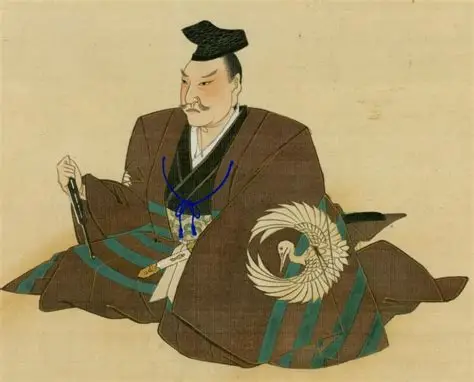
Kenkō Seki (1642–1708) was a pioneering Japanese mathematician of the Edo period, often regarded as the father of Japanese mathematics, or wasan. Despite Japan’s isolation from the Western world, Seki developed mathematical ideas that paralleled and sometimes anticipated those in Europe, making his work an independent marvel in mathematical history.
Early Life and Education
Born in Fujioka, in present-day Gunma Prefecture, Seki came from a samurai family but chose a scholarly life over a military career. Initially studying Chinese arithmetic from texts such as The Nine Chapters on the Mathematical Art, he soon began producing original methods that went beyond his sources.
By the early 1680s, Seki had already established himself as the leading figure in Japanese mathematics, attracting students from across the country.
Algebraic Innovations
Seki’s Katsuyō Sanpō (Essentials of Mathematics, c. 1683) introduced methods for solving systems of equations and calculating determinants — concepts that would not formally appear in Europe until over a century later. His elimination methods resembled modern matrix techniques and showed a deep understanding of algebraic structure.
Mathematical Notation and Methods
Seki developed a symbolic computation system known as tenzan jutsu. This notation used vertical arrangements and kanji symbols to represent variables and operations, enabling him to handle advanced problems in polynomial equations and geometry.
- Symbolic notation using kanji for unknowns
- Vertical arrangement of expressions
- Techniques for polynomial equation solving
Contributions to Geometry
Seki made significant contributions to geometry, including methods for computing areas and volumes, as well as solving complex geometric puzzles. His influence can be seen in the tradition of sangaku — wooden tablets hung in temples with challenging geometric problems.
Achievements in Determinants
One of Seki’s most striking accomplishments was his work on determinants, which he referred to as enri ("circle principle"). His methods anticipated the later European work of Cramer and Vandermonde by more than a century, showing that advanced algebraic concepts were developing independently in Japan.
Teaching and Mathematical School
Seki trained many students and founded a school of mathematics whose teachings shaped the direction of wasan for generations. His school’s influence lasted into the 19th century, bridging the gap between Japan’s pre-modern and modern mathematical traditions.
Final Years and Legacy
Kenkō Seki passed away in 1708, leaving behind a body of work that ensured Japan’s place in the global history of mathematics. His independent discoveries demonstrate the universality of mathematical thought and the ability of human creativity to flourish in any cultural setting.
Today, Seki is remembered as a symbol of Japan’s rich mathematical heritage — a figure whose insights continue to inspire both historians and mathematicians worldwide.

All rights reserved by the Mathematical Unity
Contact: +8801400044645
Email: mathematicalhorse1453@gmail.com
Our Discord Server: Mathematical Unity [Ulus Riyadiyat]